- The EU’s upward revision of its eurozone GDP forecasts has halted the euro’s decline.
- The dollar took a hit from macroeconomic data and Fed rhetoric but managed to weather it.
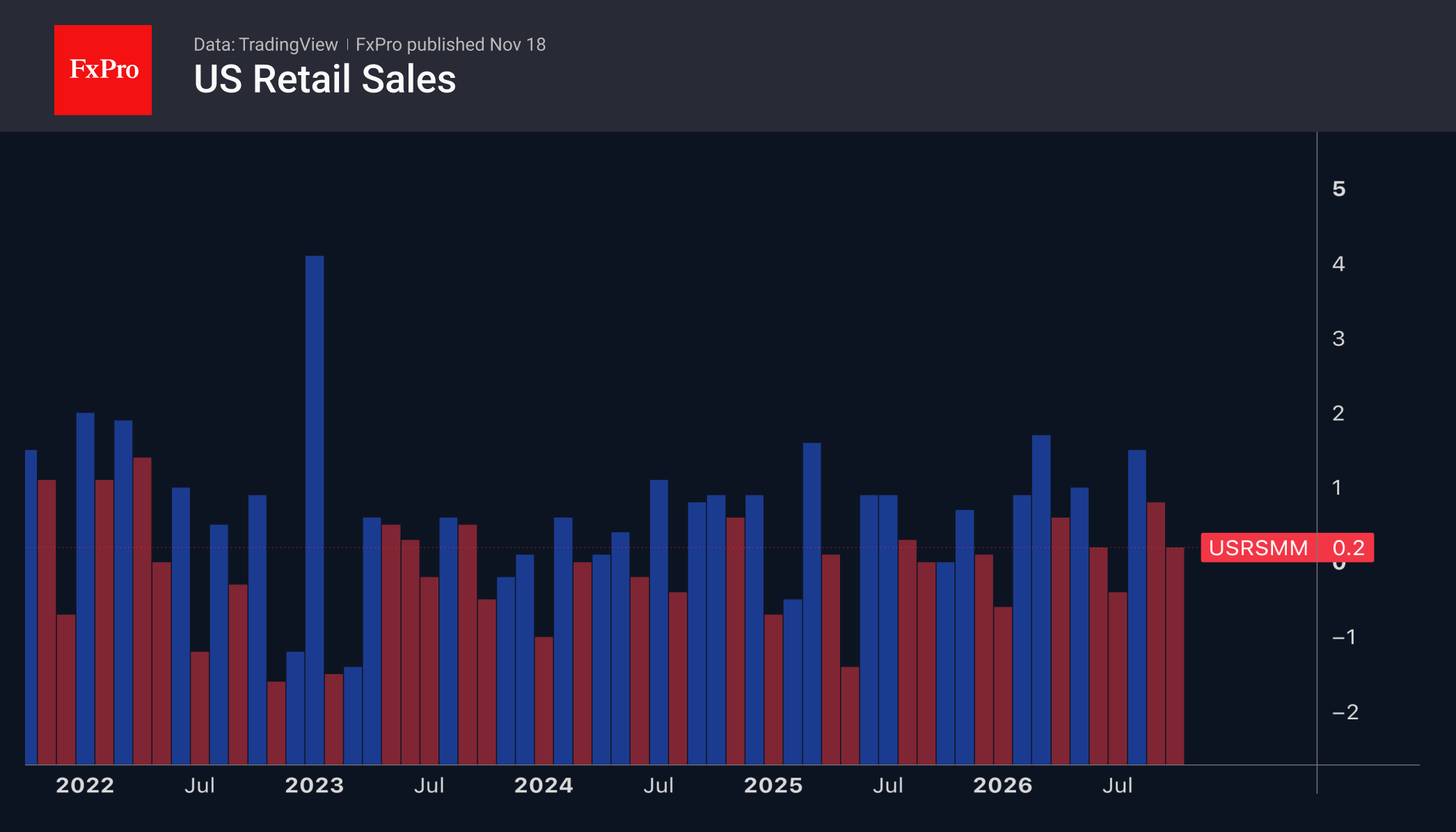
The US dollar resumed its rise after a brief pause. Pressure on the greenback came from a slowdown in October retail sales, from 0.8% to 0.2% month-on-month, as well as a statement by New York Fed President John Williams that there is no need to overreact by raising the federal funds rate by 50 basis points all at once in December. According to CME FedWatch, the probability of such an outcome fell to a meagre 3% from 15% after the release of hawkish US consumer price data. Treasury yields briefly declined, and EURUSD attempted to stabilise around 1.1000.
However, the respite proved short-lived: Nvidia‘s strong third-quarter earnings report drove the company’s stock higher after the close and boosted stock index futures. The chipmaker’s results and the potential success of Anthropic’s IPO will serve as a litmus test for artificial intelligence technologies. If the boom is not over, the US market will continue to attract foreign capital, supporting simultaneous gains in both stocks and the dollar and fuelling the continued downtrend in EURUSD.
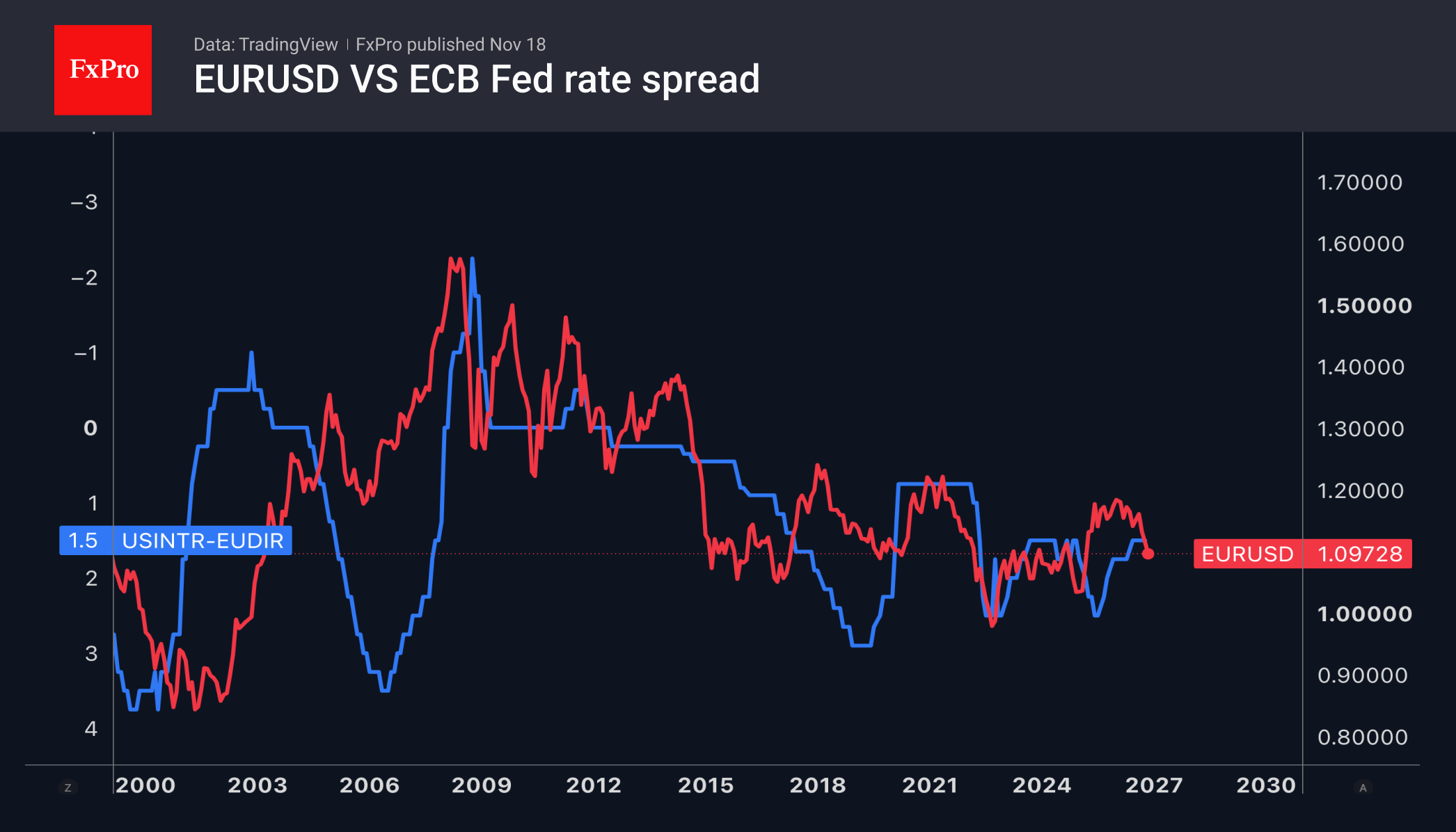
The euro received temporary support from the European Commission’s upward revision of its forecast for eurozone GDP growth in 2026, from 0.9% to 1.2%, and from its inflation projections of 3.2% in 2026 and 3.1% in 2027. These trends suggest that the ECB’s rate-hiking cycle is likely to continue. The futures market has priced in a 75-basis-point hike by the end of 2027, up from 71 basis points previously, anticipating two policy tightening moves next year following the December hike. Meanwhile, markets expect the Fed to raise rates by 85 basis points by the end of next year. The gap in favour of the dollar is an additional fundamental factor weighing on EURUSD.
As if that were not enough, French politics is also working against the single currency. Marine Le Pen leads in the polls and intends, should she become president, to cut payments to the EU budget. This risks not only reducing the European Union’s coffers but also setting an unpleasant precedent for budget contributors such as Germany, the Netherlands and Sweden. These countries contribute more money than they receive from Brussels. As a result, the European Union is trying to stay ahead of the curve and conclude agreements with the country’s current leadership. This move is causing discontent among the right wing and sparking protests that are slowing down the French economy.
What to watch
Base case: in our view, if the AI boom continues, capital inflows into the US will support the dollar and the downtrend in EURUSD.
Risk and invalidation: a rise in EURUSD above 1.11, together with a return of the sell-America trade, would invalidate the bearish scenario.
Upcoming: the FOMC minutes on 18 November at 19:00 GMT; the start of trading in Anthropic shares on 19 November; speeches by Christine Lagarde on Wednesday, Thursday and Friday (18–20 November); the final University of Michigan consumer sentiment and inflation expectations on 20 November at 15:00 GMT. Check the economic calendar for more events.
The FxPro Analyst Team